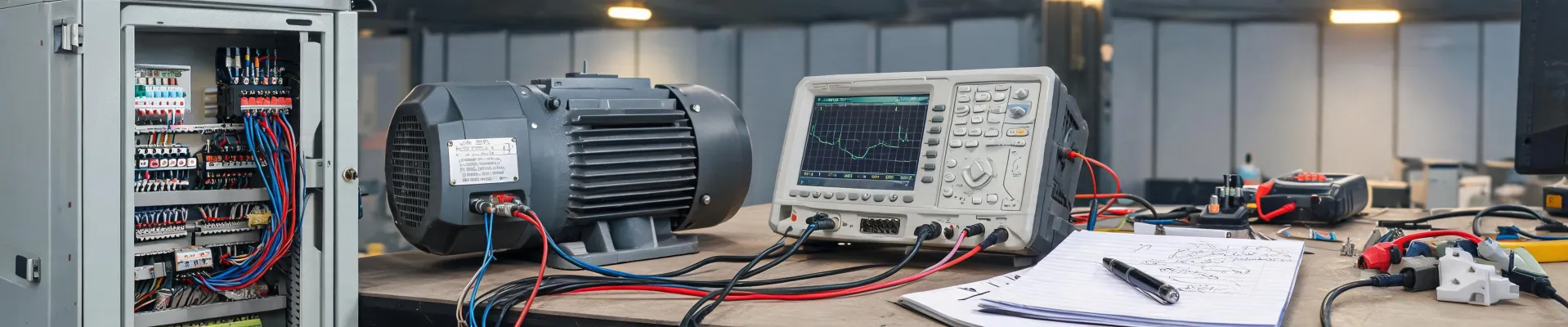
The Afternoon the Receptacles Ran Hot
The first hint that something was wrong didn't come from a test report. It came from Ray, our lead electrician, calling me from a job site on a Thursday afternoon in May 2023.
“Those receptacles are running warm,” he said. “Not hot. Warm. And the wiring diagram that came with the device doesn't match what's printed on the back.”
I had a short, uncomfortable pause. We'd installed 1,240 pieces the week before, and I was the one who approved the purchase. My gut said he was exaggerating. My head said I should get in the van.
How I Talked Myself Into the Order
I handle material purchasing for a mid-sized commercial electrical contractor. I've bought Leviton outlets and switches for so long that I stopped thinking about the brand as a decision. Leviton was our default on commercial spec jobs, period. What mattered was price and lead time.
In April 2023, we landed a tenant build-out for a 30,000-square-foot office floor. The engineering spec called for commercial-grade Leviton outlets in every workspace, plus about 340 switches and USB combo devices. Our regular authorized distributor quoted us $6,980 and a three-week delivery. Then an unfamiliar supplier showed up in my search results with a lower price and a faster promise: “Leviton wholesale, in stock, ships tomorrow.” Their quote was $4,580.
I didn't jump the same day. For three days, I compared every line item against Leviton's published specs. Catalog numbers matched. Product photos looked identical. Their website talked about surplus stock from a canceled hotel project in Nevada. They answered my emails at 9 p.m., which I read as hustle. It wasn't. It was a script.
Here's the oversimplified thought that got me: a UL mark is a UL mark. If the box says UL and the face says Leviton, then my supplier-check job is done. I'd done light switch wholesale orders since 2018 using that same shortcut, and it always worked. In my opinion, that's the most dangerous sentence in procurement: “It worked every time before.”
What the Pallets Looked Like
The pallets arrived on schedule. Packaging was right—clean die cuts, crisp logo, correct catalog numbers on every carton. I opened three boxes and compared the units against the reference sample we keep in the office. The plastic color matched. The embossed Leviton logo matched. The back-wiring holes even looked right.
I signed the delivery receipt and released the remaining payment. That was the moment I should have looked at the supply chain, not the product. I did the opposite.
The install went in without drama for the first week. The drama showed up when an office wing was loaded for the first time—conference rooms, training rooms, a small kitchenette. Ray called me about the warmth. I drove over expecting to find an overcorrected breaker or a bad circuit. Instead, he showed me a digital thermometer reading 128°F on the face of a receptacle after forty minutes of normal load.
Then he pulled the folded instruction sheet out of the box. “Read this,” he said.
It looked like a standard Leviton outlet wiring diagram—black screw to hot, silver screw to neutral, green to ground. Until you followed it. The terminal positions on the actual device didn't match the drawing, and the switched receptacle in the room was dead. When Ray opened a second device, the brass-colored contacts had a rough, grainy finish that the genuine units don't have.
He looked at me and said exactly what I was thinking: “We need to test the rest of them.”
The surprise wasn't that counterfeits exist. I knew that by then. The surprise was that they looked this good. The old tells were gone. Nothing was misspelled. Nothing was pixelated. The lot had even passed our visual sample check, which I'd been doing for years.
The next morning, we cut one of the suspect units apart and compared it with a genuine Leviton outlet from our reference bin. The internal differences were subtle but real: a thinner contact strap, rougher stamped edges, a slightly chalky housing that looked right until you knocked on it. The certification marking on the back carried a file number that, when I searched it, belonged to an entirely different product category. Someone had copied a real marking from something else and printed it on this run.
And the supplier? The phone number stopped working the day after our first complaint. The email bounced. The documents they'd sent were just well-made props. They bought time; they didn't buy legitimacy.
What It Cost Us
We stopped the project, removed every suspected device from the completed walls, and reordered from our authorized distributor. Genuine units arrived nine days later. Keeping the schedule meant paying six electricians overtime through a weekend. The original authorized quote had been $6,980. After the failed lot, we paid the dead invoice of $4,580, a second invoice of $6,980 for the genuine replacements, $640 in express freight, and nearly $2,000 in weekend overtime. The material line ended up north of $14,000—which is a polite way of saying I bought the same project twice.
I've personally made and documented four significant procurement errors since 2017. This one was the most expensive by a wide margin, and it taught me more than the other three combined.
In a way, I'm glad it happened to me instead of to a younger buyer with less support. At the same time, I can't fully forgive myself for the obvious part: I let a price gap do my thinking. Since then, I've run a stricter pre-order check. In eighteen months, it has flagged eleven quotes from suppliers who didn't want to answer basic traceability questions. It has not slowed down a single legitimate order.
Why the Old Advice Doesn't Work Anymore
What bothers me most about that 2023 order is that my old checking routine would have been sufficient five years earlier. Back then, most fakes were easy to spot: wrong logo spacing, sloppy printing, packaging that said “compatible” instead of “Leviton.” A visual sample check was genuinely useful advice. The market has changed. The fakes got better, and the channels got bigger. Today a buyer can wire a five-figure payment to a supplier on the other side of the country without ever touching a physical sample.
If the best practice you're using is “compare photos and request a certificate,” you're checking things that no longer separate good suppliers from bad ones. The fundamentals haven't changed—genuine branding, valid certification, honest chain of custody. What has changed is the amount of effort a bad actor will invest in faking the first two. So your verification has to focus on the third.
How to Evaluate Outlet Manufacturers Now
When someone asks me how to evaluate outlet manufacturers, I tell them to run this five-point check before any large wholesale order:
- Confirm the channel, not just the brand. Ask if the supplier is an authorized distributor or has written authorization to resell Leviton products. Verify that claim independently with the manufacturer. A PDF from the supplier doesn't count.
- Verify certification marks with the agency. Use the certification body's online directory to see whether the file number on the device actually belongs to that product. It takes five minutes, and it would have saved us the whole $14,000.
- Ask for photos of the physical stock. Actual cartons, actual devices, a handwritten note with today's date and the batch code. If they send marketing renders, that's a red flag.
- Buy a small sample before the batch. Don't just look at it. Install it. Run it under load for an hour and feel the faceplate. The sample should behave exactly like the known-good unit you already trust.
- Watch the payment structure. First-time suppliers asking for 100% wire upfront are asking you to hold all the risk. A legitimate wholesale transaction has terms, even for new customers.
This list applies across product lines. It works for a high-stakes Leviton outlet order, and it works for ordinary light switch wholesale pricing. The price tier doesn't change the math: the cheapest product is only cheap if it survives the first year of service. A hidden reinstall cost will wreck any budget.
It also applies if you're evaluating a socket OEM partner. When you put your own brand on a device, you're taking responsibility for a product you didn't design. If the factory can't provide transparent certification and batch traceability at the component level, the risk isn't just a warm receptacle—it's an inspector, a recall, or worse.
The Real Lesson
Ray and I still joke about the afternoon he introduced me to my own ignorance. But I've taken the lesson seriously. A brand name tells you what the product should be. Chain of custody tells you what it actually is. Check both, every time.
Six months after that project, I moved to the distribution side of the business. Now I'm the one answering verification questions from contractors every week, and honestly, I don't blame them for asking. Every Leviton outlet order we ship gets the kind of traceability record that would have saved me back in 2023. It's a strange feeling to sell the thing you once feared buying.

Rebecca Sloan
Rebecca Sloan is a power distribution and protection analyst specializing in circuit breakers, switchgear, contactors, fuses, surge protective devices, and coordination. She applies IEC 60947-2 breaker requirements, IEC 60269 fuse characteristics, and IEC 61643-11 tests while examining rated voltage, breaking capacity, time-current curves, selectivity, and prospective short-circuit current. She helps engineers and buyers compare protective devices against documented fault levels, installation conditions, maintenance access, and continuity priorities.