-
There's no single answer, and that's the first thing to get straight
-
Situation 1: You're buying a new VFD drive for a replacement or new build
-
Situation 2: Your Danfoss VFD is showing an A60 alarm and you need it running today
-
Situation 3: You need to test a blower motor before deciding anything
-
Situation 4: Your request is for a jet aeration control panel, not a single drive
-
So which situation are you in?
There's no single answer, and that's the first thing to get straight
I've been handling operational purchasing for a 240-person facility services company since 2020. We process somewhere between 60 and 80 orders a year, and VFD-related requests have been climbing steadily — probably because more of our clients are upgrading old blower and aeration systems. The technical calls go to our facilities engineers. I handle the vendors, the timing, and the paperwork.
What I've learned the hard way is that "which VFD should we buy" is at least four different questions depending on where you're standing. A new install is not the same as a Danfoss VFD flashing an A60 alarm on a Saturday. And a jet aeration control panel is not the same as a single drive swap, even if the PO line items look similar.
So I'll split this by situation. If you can figure out which one you're in, the rest usually sorts itself out.
Situation 1: You're buying a new VFD drive for a replacement or new build
If the engineers have already spec'd the drive and you're just executing the order, this is the easiest case. The comparison you'll get asked about most often is Danfoss VLT drives versus Siemens VFD drives — both are legitimate, both have deep installed bases, and both have solid documentation ecosystems.
My rule of thumb, which has yet to fail me: the doc access beats the spec sheet comparison. When a line is down at 2 a.m., nobody wants to hunt for a manual. Danfoss VLT manuals, parameter lists, and fault code references are readily accessible, and Siemens documentation is equally comprehensive. The realistic question is which ecosystem your maintenance team already thinks in. If your techs know Danfoss parameters cold, switching to a marginally cheaper Siemens drive to save maybe 8% is usually a false economy.
The second thing I've started asking before any order goes out: does the distributor we're actually buying from hold genuine stock on this model, or is "available" just a catalog word? In April 2024, we paid roughly 15% over standard pricing to get a replacement drive from a distributor who could commit to next-day delivery on a specific date. The alternative was another week of downtime on the jet aeration control panel — and our client's operations team estimated production losses at around $2,000 per day. That math wasn't close.
(Note to self: I really should have that distributor on speed dial by now.)
One more thing on this situation: request the danfoss vfd control wiring diagram with the shipment, not after. It's the first thing anyone needs when they open the box, and it's usually the last thing that arrives.
Situation 2: Your Danfoss VFD is showing an A60 alarm and you need it running today
Take a breath. The danfoss vfd a60 alarm is a motor phase loss fault. It means the drive detected a missing or badly unbalanced phase — often in the wiring to the motor, or inside one of the motor windings. It does not automatically mean the drive is dead.
Here's the check order I've learned to push for before authorizing any purchase:
- Inspect the motor connections and terminal blocks for anything loose or scorched
- Confirm whether the problem is the motor or the drive — usually settled by a resistance check on the motor (see Situation 3)
- Pull the alarm history from the VLT log, which will show the load and current readings at the moment of the trip
This goes against what a lot of buyers do instinctively: order a replacement drive the moment the alarm code appears. I've seen it happen twice in my time here — both times the replacement drive arrived, got installed, and the A60 came right back because the fault was a motor or cable issue. You end up with a $600-$900 purchase sitting on a shelf and a problem that still isn't solved.
If the drive is genuinely the problem, then the delivery question comes back into play. Once you've confirmed the drive needs replacing, don't shop for the cheapest quote with a four-day window — pay for the distributor who can commit to a date. A guaranteed Tuesday beats a "probably Tuesday" every time on a line that's down.
Situation 3: You need to test a blower motor before deciding anything
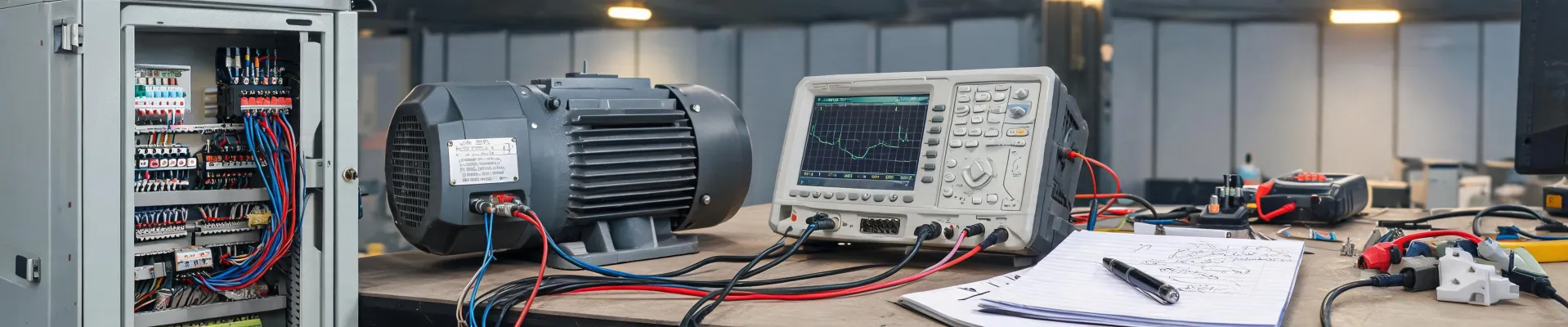
This is the situation most people skip, and it's the one that saves the most money. If you're seeing alarms or degraded performance on a VFD-driven blower, testing the motor's winding resistance with a multimeter is the fastest low-cost way to figure out whether you're chasing a motor problem or a drive problem.
The basic sequence, after lockout/tagout:
- Disconnect the motor from the drive.
- Measure resistance across each pair of phases (L1-L2, L1-L3, L2-L3) with your multimeter. The readings should be roughly equal — typically in the low single digits on an industrial blower motor, though you should compare against the motor nameplate.
- Measure from each phase to the motor frame (ground). That reading should be in the megohm range. Anything that reads low or near zero suggests an insulation failure.
- Watch for an outlier — one phase reading higher or lower than the others usually means the motor is the problem, not the drive.
One caveat I've learned to include every time I bring this up: this is a job for a qualified maintenance tech, not for someone with a $25 multimeter. Insulation tests in particular need a megohmmeter, and industrial voltages are not a place to learn by doing. On our jobs, this is a technician task that I schedule as a preventive step — and it's saved us from ordering the wrong part more than once.
Everyone told me to always check the motor before authorizing a drive purchase. I only believed it after skipping that step once in early 2024 — ate roughly $600 on a drive that solved nothing. Now it's a standing step in every VFD request.
Situation 4: Your request is for a jet aeration control panel, not a single drive
This is where the scope changes and the buyer's job changes with it. A jet aeration control panel typically bundles drives, motor protection, PLC control, contactors, and fusing into a single integrated system. It's not a "pick a VFD" problem — it's a "pick a system where every part is compatible and replaceable" problem.
My experience with these is short but pointed: do not piece this together from mixed sources. The integration failures happen in wiring and component compatibility — control voltage mismatches, drive models that don't match the PLC logic, protection devices sized for the wrong motor. On one project I inherited, a jet aeration panel was assembled from three separate quotes and spent two months chasing grounds and nuisance trips before a single aeration blower ran clean.
When I'm sourcing a panel now, I ask for:
- The complete drive list and the control wiring diagrams, together — not as separate line items
- Whether the panel is bench-tested and shipped integrated, or assembled on site
- Whether the drive brand shown is standard stock with a local distributor, so replacements aren't four days away when something fails
The last point is the one that's easiest to overlook and hardest to fix later. A panel built around an unusual drive model can become a recurring procurement headache — you don't need the exact replacement on hand, but you do need to know you can get it fast.
So which situation are you in?
Quick check:
- Buying a new drive with a spec sheet in hand → Situation 1
- Existing Danfoss drive showing A60 → Situation 2 (test the motor before you buy)
- Suspecting a bad blower motor → Situation 3
- Sourcing a complete jet aeration control panel → Situation 4
The mistake I see most often — and the one I made myself — is conflating Situation 1 and Situation 2. Ordering a replacement drive because the alarm code looks scary, without first testing the motor, is the single most expensive shortcut in this whole workflow. Test the motor. Understand the wiring. Then, and only then, talk to the distributor about delivery certainty and what that certainty is worth on your timeline.
On a dead line with a hard deadline, paying extra for a guaranteed date is usually the cheaper option. On a normal replacement, take the standard window and keep the money. The trick is knowing which one you're looking at before you pick up the phone.

Pavel Novak
Pavel Novak is a generator and backup-power analyst specializing in standby, portable, diesel, gas, inverter, and commercial generating sets with transfer equipment. For reciprocating-engine sets, he applies ISO 8528-5 dynamic-performance criteria and IEC 60034-1 generator ratings to load steps, starting current, voltage and frequency recovery, cooling, and output; for transfer equipment, he uses IEC 60947-6-1 requirements. He helps facility teams and buyers select systems around emergency loads, runtime, commissioning, fuel strategy, service access, operating cost, and resilience.