Here's the part that gets me funny looks in vendor meetings: order size is not a quality grade.
A purchase order for one Honda EU2200i portable generator and a purchase order for forty of them should go through the same gate. Same load test. Same paperwork. Same signature at the bottom.
I handle quality and brand compliance for a Honda generator distributor. I sign off on roughly 150–200 units a month before they ship, plus whatever leaves the parts counter. In 2022 we wrote an inspection protocol that explicitly does not scale by PO value. It costs us money. I've been asked twice to relax it. I haven't.
If you got here searching for what a fuel pump replacement runs, or how to pull a spark plug on a small engine — stay. You're the reason the policy exists.
The batch that settled the argument
Q1 2023. Sixty units of the EU2200i. The visual inspection came back clean — no shipping damage, no finish defects, paperwork matched.
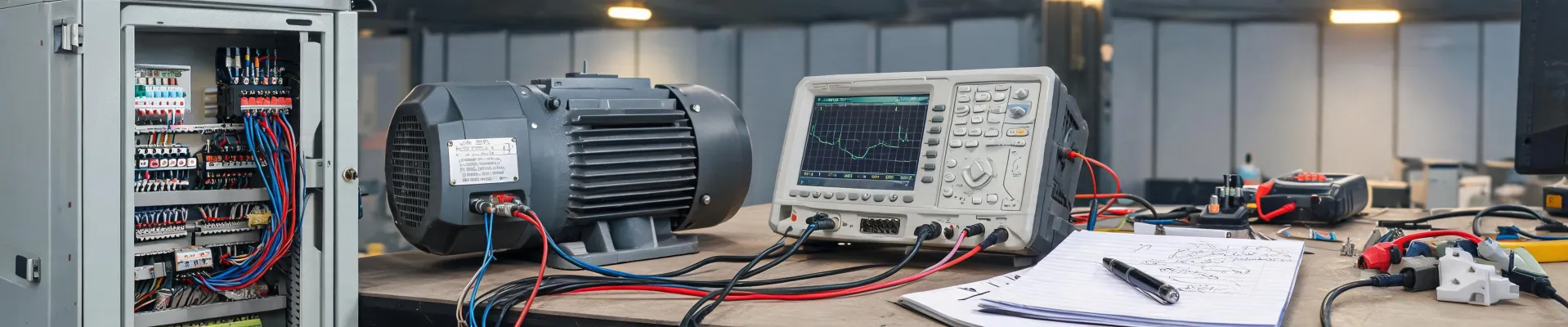
Then the load test. Every unit, twenty minutes at about half load, because that's where a marginal fuel delivery problem shows up as surging instead of as a dead unit on the bench.
Three of them hunted and shut down once warm.
Root cause traced to a lot of fuel pump assemblies with a diaphragm spring on the short side of the tolerance band. The vendor's response was that it was "within acceptable variance." Maybe it was, on paper. It wasn't within ours. We rejected the batch and they redid it.
Here's the number that ended the debate internally. If we'd sampled five units out of sixty — which is a defensible sampling plan for a lot that size — there was roughly a 77% chance we'd have caught none of the three bad ones. Not a 77% chance we'd miss one. A 77% chance we'd miss all three and ship the lot.
That's not a QC failure. That's a coin flip dressed up as a process.
The causation runs backwards, and that's the whole point
People assume big orders get heavier scrutiny because big customers matter more. Fair assumption. Wrong direction.
Shops that build real inspection habits on small orders are the ones big buyers end up trusting — the discipline comes first, the fleet account comes later. But there's a sharper version of this that almost nobody says out loud:
The customer buying one unit has the least redundancy. The customer buying forty has the most.
A contractor with a single inverter on a jobsite loses the day if it dies. A rental fleet with forty of them swaps one out and keeps moving. So we've built an industry convention that applies the lightest touch to the buyer with the thinnest margin for error, and the heaviest touch to the buyer who's already protected.
That's not risk management. That's just habit with a spreadsheet attached.
The parts counter is where the reputation actually lives
Someone types "how much to replace a fuel pump" into a search bar and gets either a paywalled forum thread from 2011 or a page that says "it depends." Let me at least give you a range with a date stamped on it.
As of early 2025, on the small inverter models: a replacement fuel pump assembly runs somewhere in the $40–90 range for OEM, less for aftermarket. Shop labor is usually in the half-hour to one-hour band at whatever the local rate is. Take this with a grain of salt — parts pricing moves fast and dealer rates vary wildly by region.
And one honest caveat that saves people money: some of these units are gravity-fed and don't have a pump to replace. Pull the parts diagram for your exact model before you order anything. We get returns on this constantly, and it's not the customer's fault — the listings don't say.
On how to remove a spark plug from a lawn mower — same discipline, smaller stakes. Let the engine cool completely. Pull the boot by the boot, not by the wire, or you'll be buying an ignition lead too. Most small Honda engines take a 5/8" or 13/16" socket depending on the plug. Service data lists torque around 14 N·m (about 10 lb-ft) and a gap in the 0.6–0.7 mm range for most of these — but pull the number for your specific model, because guessing on a cylinder head is expensive.
Cross-thread a plug and you're not buying a plug anymore. You're buying a thread insert, or a head.
Why does the six-dollar spark plug matter to an argument about inspection policy? Because the person buying it today is the person buying a Honda portable generator for home backup in eighteen months. Not because of a lifetime-value spreadsheet. Because he remembers who answered the question straight.
Where I stop, and I'll say so out loud
I'm not a licensed electrician and I'm not a power systems engineer. If you're asking me to size an 80 kW natural gas generator for a standby application, I'm the wrong person and I'd rather tell you that than guess.
An 80 kW natural gas unit is a different animal — stationary, liquid-cooled, sized around a load calculation, wired to an automatic transfer switch, plumbed to a gas line that has to be rated for it, permitted, inspected. Honda's portable and inverter line doesn't live in that world, and any answer that tries to bridge the two with a part number is a guess wearing a uniform.
What I can tell you from a compliance seat: whichever brand you land on for that install, ask the dealer for the factory test sheet for your specific unit. Not the spec sheet. The test sheet. If they can't produce one, that tells you something about how the unit was handled before it reached you.
"Minimum order quantities exist for a reason"
Granted. Genuinely.
MOQs make sense where setup cost is real — custom windings, powder coat runs, printed enclosures, a four-hour line changeover. When a factory sets a floor at fifty units, that's arithmetic, not snobbery. I've defended it in meetings.
But there's a difference between a manufacturing floor and a distributor sighing audibly at a one-unit order. Those two things get conflated constantly, and only one of them is defensible.
Second objection, and it's a fair one: you can't afford to load-test every unit at this price point.
We can. Twenty minutes at load, plus the fuel and the bench time, adds a few dollars per unit. We built it into the price and we say so on the line item. Nobody's walked over it yet.
I did once cut that corner under pressure, and I regret it. Had about ninety minutes to decide hold-or-release before a truck rolled toward a contractor's install date. Standard protocol would've been two full days of retesting on the whole lot. I released the units that had already cleared and held the rest. One of the released ones came back six weeks later with the exact symptom I was worried about. In hindsight I should've held the truck. The deadline was real, but it wasn't mine to absorb.
So here's where I land
Inspect the order in front of you. Not the order you hope it becomes.
Load-test the single unit. Answer the spark plug question properly even though the margin on a plug is pennies. Tell the guy asking about 80 kW that it's not your category, and point him somewhere honest. Reject the batch even when the vendor waves "industry standard" at you, because industry standard is a floor, not a ceiling.
Small doesn't mean unimportant. It means early.
And the shops treating a one-unit Honda generator order like it's a fifty-unit fleet order are the ones that will still be here when it becomes one.

Pavel Novak
Pavel Novak is a generator and backup-power analyst specializing in standby, portable, diesel, gas, inverter, and commercial generating sets with transfer equipment. For reciprocating-engine sets, he applies ISO 8528-5 dynamic-performance criteria and IEC 60034-1 generator ratings to load steps, starting current, voltage and frequency recovery, cooling, and output; for transfer equipment, he uses IEC 60947-6-1 requirements. He helps facility teams and buyers select systems around emergency loads, runtime, commissioning, fuel strategy, service access, operating cost, and resilience.